Costed Jira tickets?
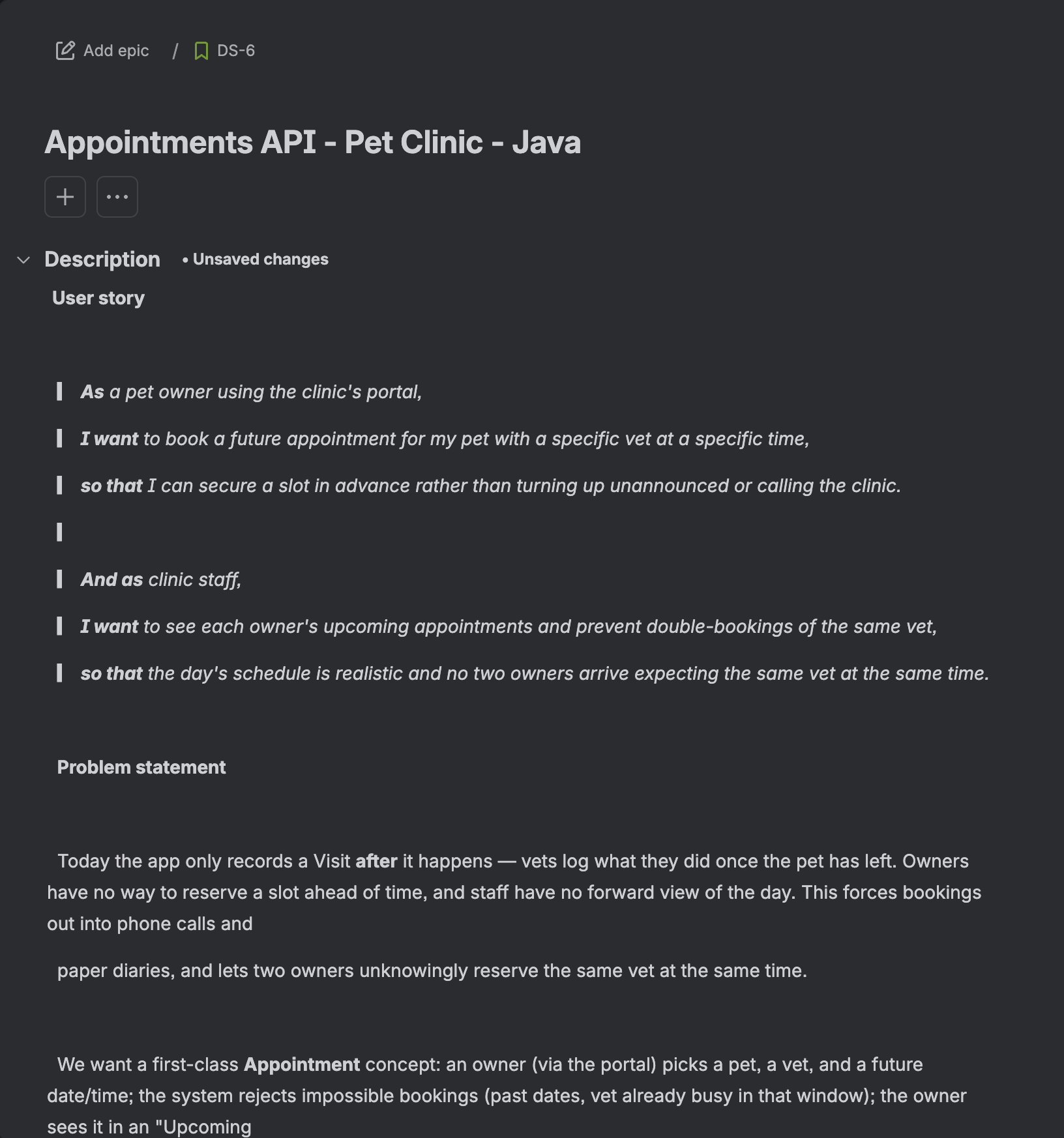
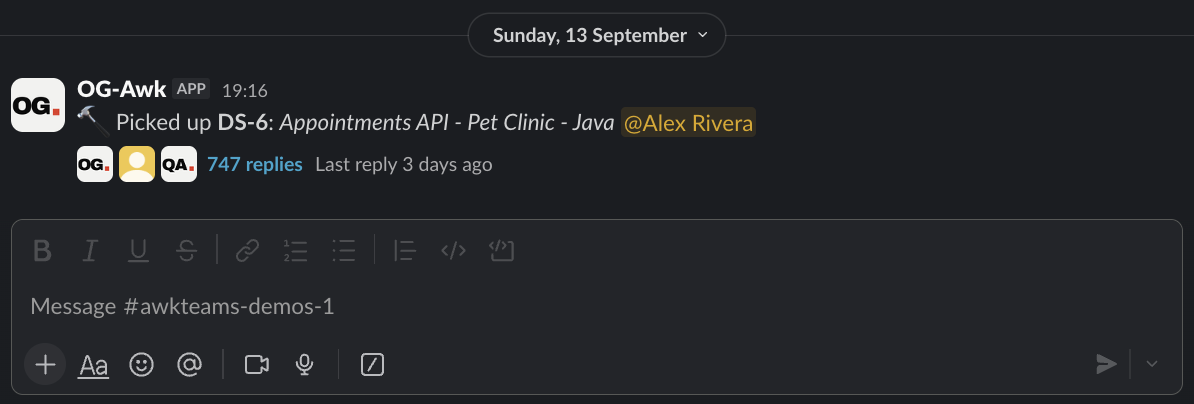
One work item through the software factory, start to finish. A Jira ticket went in. AI developers and testers built and tested it. Here's what it cost.
This Java backend ticket cost ≈ $27 to develop & QA with awks (agentic workers).
Initiative costing is no longer a vague FTE estimate.
This ticket cost ≈ $27 to build and QA
screenshot
What does this mean for my business?
A delivery pipeline run by a team of AI agents (awks). Write the Jira ticket. Get back a reviewed change, a preview URL, and what the ticket cost.
Credits are metered per ticket — every ticket carries a real, itemised price in credits, so engineering spend is a line item you control, not a guess.
We manage token spend for you: each task is routed to a model matched to its complexity, and context is kept lean as work runs — so credits go to the work, not to overhead.
Each change leaves a shareable trail — DoD evidence, QA results, code review, handoff briefs — ready for sign-off.


What the reel leaves behind.

Live-updated doc the OG mirrors during the build — screenshots, invariants, notes. Shareable link posted in-thread.

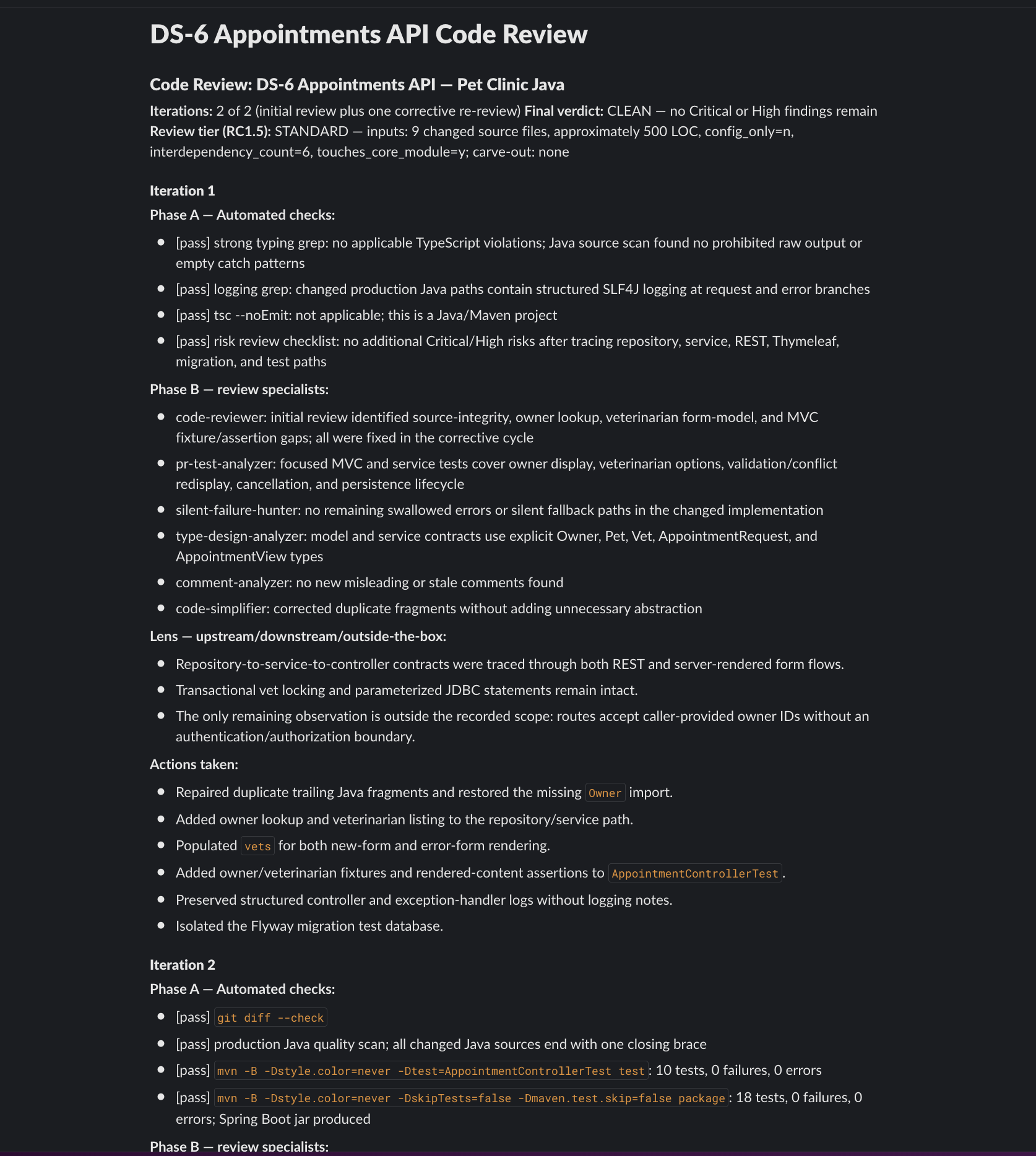
Findings surfaced on the diff: correctness, simplification, efficiency. Each finding links back to a Jira sub-task.

Every handoff — dev→QA, QA→dev, dev→UAT — writes a brief canvas: what changed, what to verify, what still hurts.
What did the tokens buy? Metered per work item.
Every agent on the thread, counted once
A seat bill tells you who spent it.
It cannot tell you this.
- A reviewed change2 review rounds · verdict clean
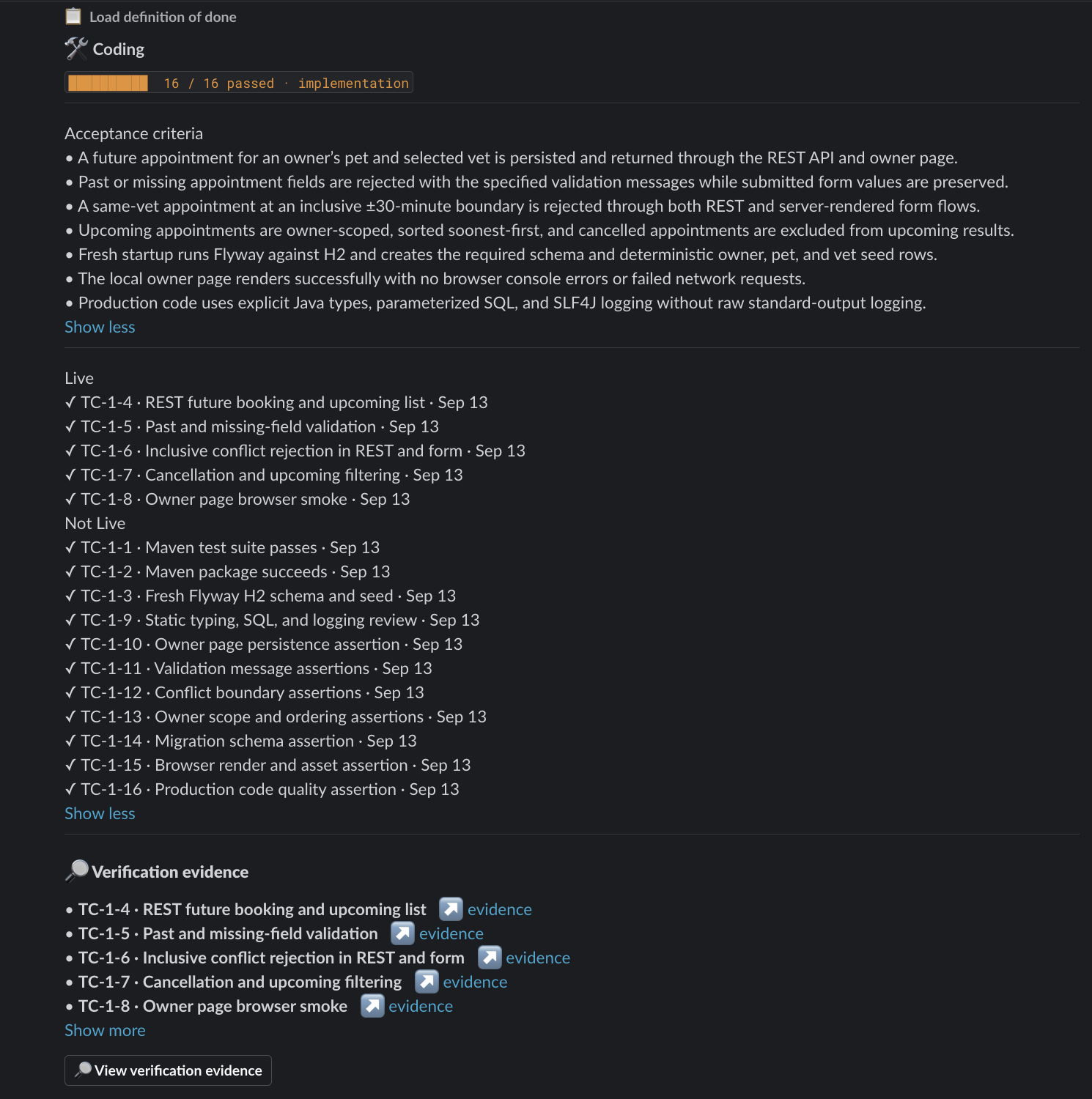
- A Definition of Done, with evidence16 / 16 items verified
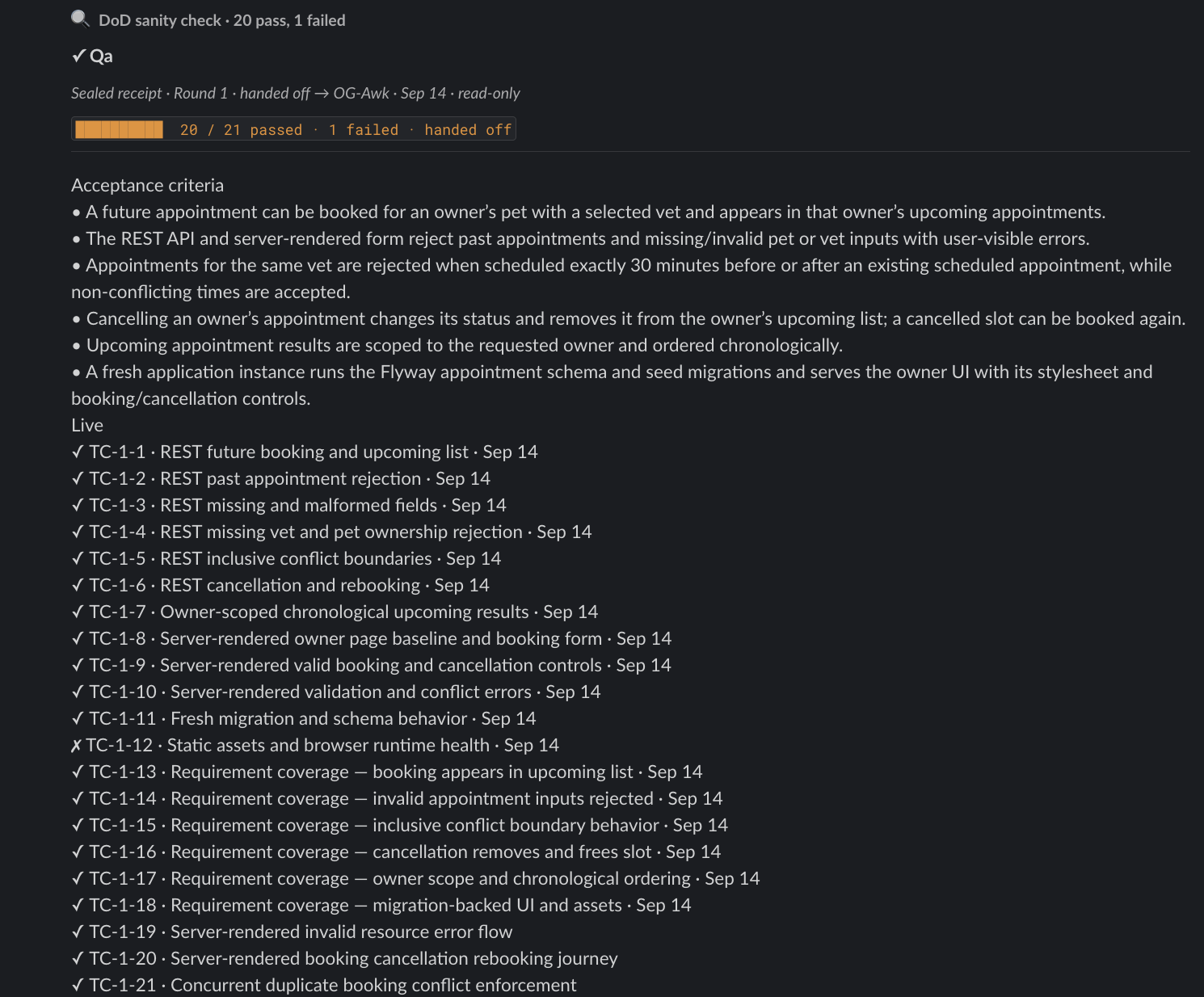
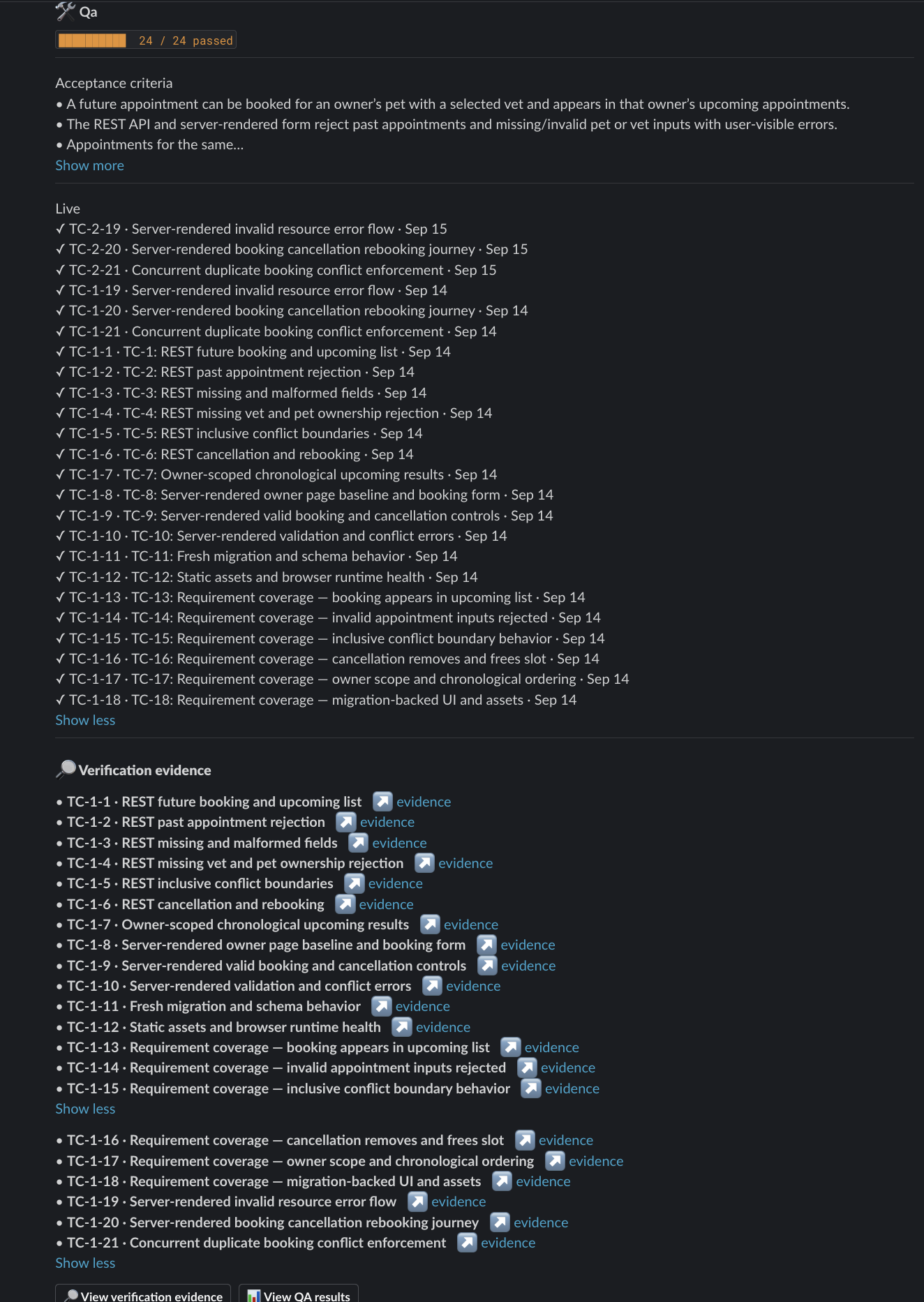
- A QA suite, authored and run21 cases, round 1
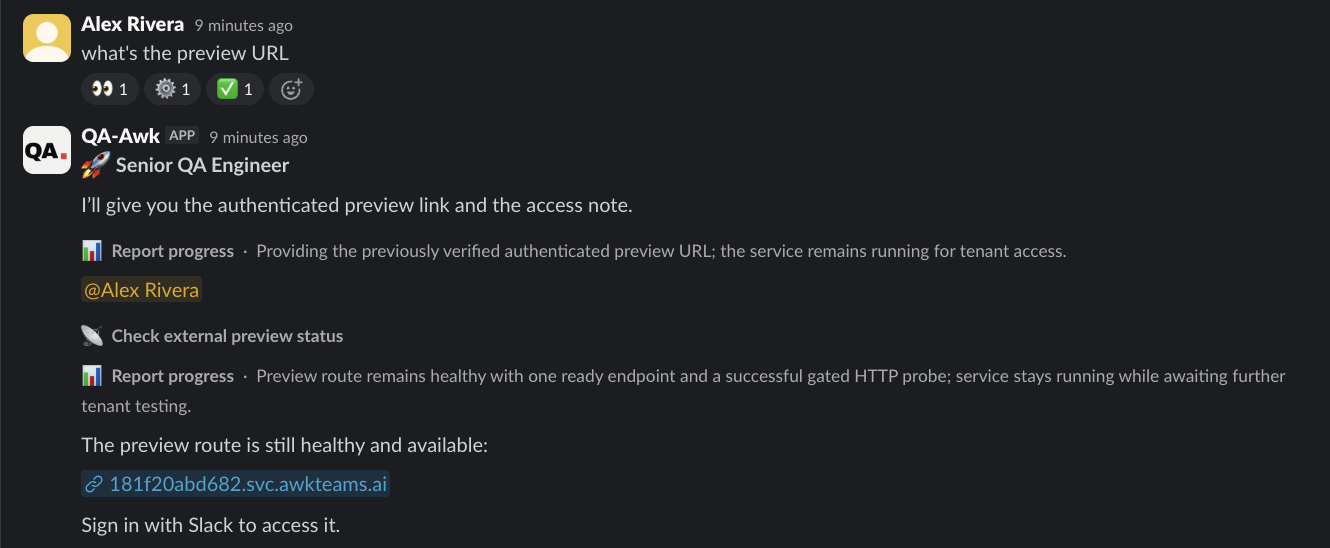
- A real failure, caught20 / 21 passed · 1 handed back
- Fixed, then re-verified24 / 24 passed
- Handoff and handback briefsOn the ticket, dev → QA → dev
- A preview URL and a moved ticketSign-in gated · ready for UAT
Same spend. The difference is that it is sorted by the work it produced, not by the user seat it was billed to.